On the staff who keep school systems running and what it means to become AI literate
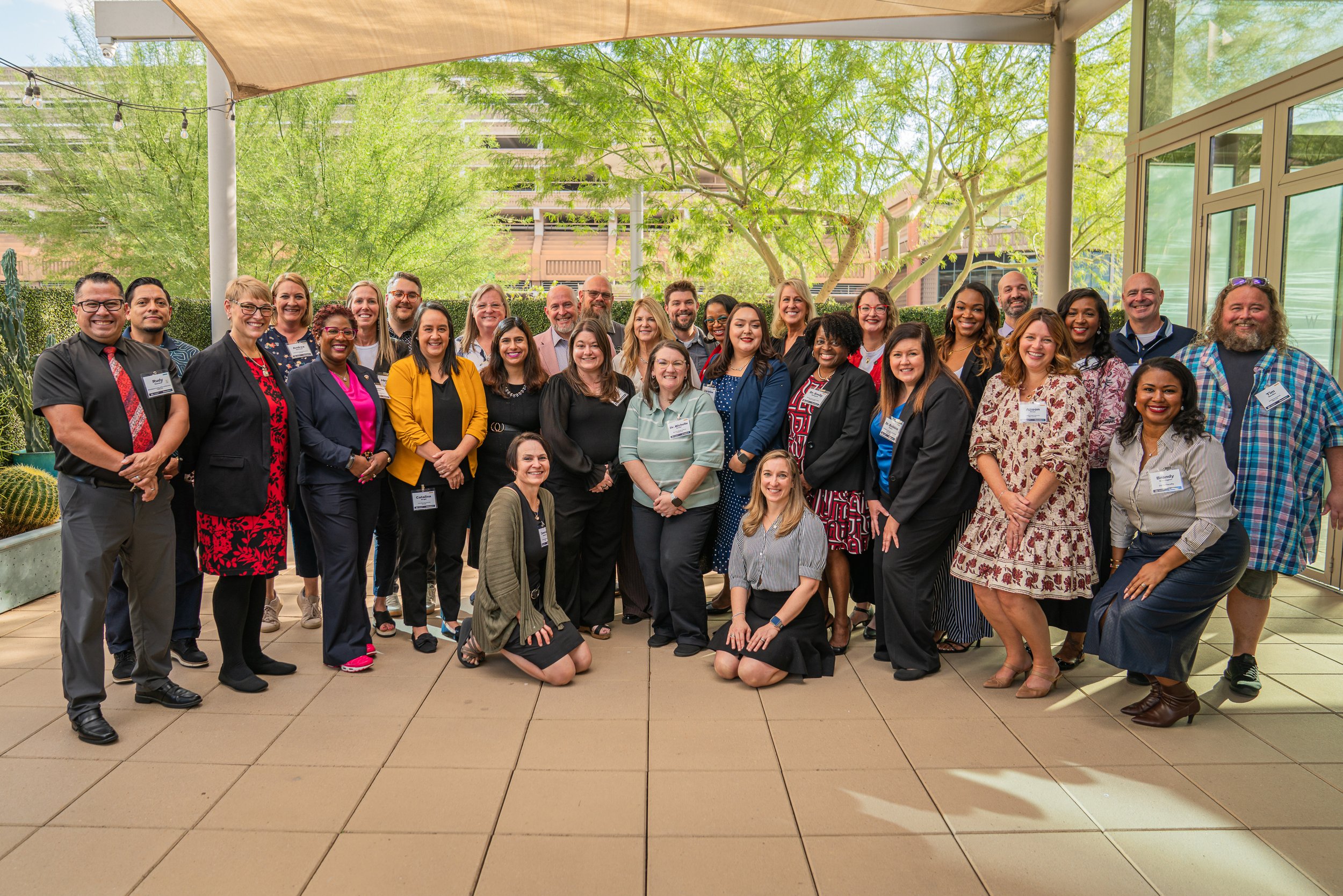
Building Leaders from the Cohort, Scottsdale, Arizona (Oct 2026)
At the opening convening of the ISTE GenerationAI Fellowship Cohort 3, I joined education professionals from across North America to explore the opportunities and challenges of artificial intelligence. Many of the conversations centered on teaching, learning, and what AI could mean inside classrooms. That emphasis makes sense. Teaching and learning are, after all, the reason school systems exist.
As an operations professional, I came to the convening from a different part of public education. My work at Chicago Public Schools focuses on strategy, operations, and workforce systems. I've always been interested in how people find creative ways to get things done, especially when the systems around them are complicated or imperfect. AI has added a new dimension to that longstanding interest of mine: what might become possible when people have new ways to approach familiar challenges?
The convening brought me back to a question I've been considering in my own work: When we talk about AI literacy in education, are we thinking broadly enough about who needs it?
MAKING IT WORK · NO. 001 THE 20-SECOND READ
AI Literacy Shouldn't Stop At The Classroom Door.
School systems depend on people managing transportation, staffing, payroll, and other essential operations. They need opportunities to understand AI, not just to learn new tools, but to question processes, identify problems worth solving, and shape how technology is introduced into their work.
The People and Systems Behind the Classroom
A large school district is also a complex operational organization. CPS, for example, has a 10+ billion-dollar annual budget. Beyond teachers and school leaders, there are professionals responsible for staffing, payroll, employee benefits, transportation, nutrition, procurement, technology, and many other functions that allow schools to operate.
These functions may not be directly instructional, but their impact is felt in classrooms every day. A staffing delay can affect whether a student has a bus driver to get to school. A payroll error can create stress for an educator. An administrative process that requires repeated follow-up can consume time that school leaders would otherwise spend supporting teachers and students.
This isn't an entirely new conversation. CoSN's Driving K-12 Innovation 2025 report explicitly advocates cross-departmental approaches to AI adoption in school systems. The OECD's 2026 research on building an AI-ready public workforce similarly recognizes that government employees need a combination of AI knowledge, critical thinking, and organizational capabilities.
These discussions leave me with a practical question for public education: What does meaningful AI literacy look like for the people responsible for running a school district?
The answer may differ for a transportation route planner, a staffing specialist, or a grants analyst. Their responsibilities involve different information, decisions, constraints, and risks. Each, however, brings expertise that should inform how AI is introduced into their work.
(As We Are All Learning) AI Literacy Is More Than Knowing How to Prompt
I've had the opportunity to train 178 CPS colleagues in project management, including introducing AI concepts and tools as part of that training. In these sessions, I've noticed that colleagues sometimes describe their AI experience modestly. They'll say they "only" use a chatbot to draft emails, summarize information, or ask questions.
These are useful applications, and conversational AI is an accessible starting point. But I've also seen how introducing tools such as NotebookLM (or Gemini Notebook in its latest avatar) and Gemini Canvas can prompt people to consider other possibilities: organizing information, structuring their work, or approaching a cumbersome task differently.
These are early explorations, and definitely not robust enough data to give us evidence of redesigned workflows or measurable improvements. But they make me curious about what more sustained learning might encourage.
Could we move from asking, “What else can I do with our district-approved AI tool?” to asking, “What problem am I trying to solve, and could there be a better way to approach it?
Tools will come and go. The ability to examine a problem, question assumptions, and evaluate alternatives will remain valuable.
This broader understanding of AI literacy is reflected in existing research. UNESCO's AI Competency Framework for Teachers includes human-centered thinking, ethics, and professional learning alongside technical knowledge. The OECD identifies problem-solving and critical thinking as important capabilities for public employees working with AI.
If those competencies matter for educators and public servants, they deserve attention among the administrative professionals working in public education, too.
From Learning Tools to Asking Better Questions
One challenge with workplace AI training is that the technology itself can become the starting point. We learn what a tool can do and then look for opportunities to use it. That is one way of sequencing learning. But what if we also reversed the sequence, starting with the work, identifying a problem, and only then considering whether AI might help?
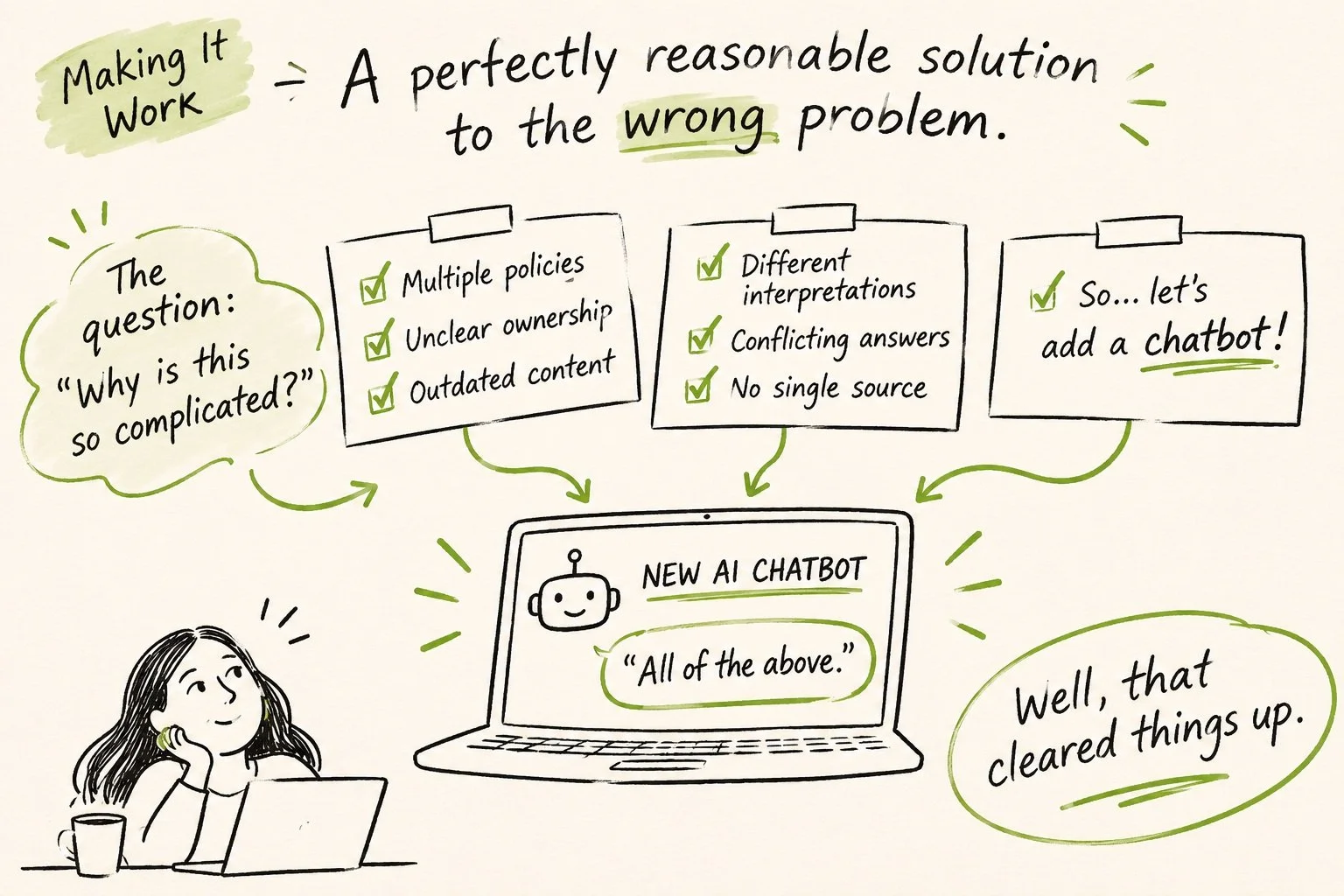
Consider a familiar challenge in large organizations: employees struggle to find reliable answers to routine questions. An AI chatbot might seem like an obvious solution. But why is the information difficult to find in the first place?
Is it scattered across multiple sources? YES.
Are policies outdated or contradictory? ALSO, OFTEN YES (sadly).
Does the answer depend on individual circumstances? MAYBE(?).
These are organizational questions before they are technology questions. AI might help, but it cannot independently resolve every underlying problem. The same is true of administrative tasks that appear repetitive but involve exceptions, sensitive information, or decisions requiring human judgment. This is where I think AI literacy becomes more interesting than learning to use a particular tool. It means recognizing opportunities, understanding limitations, and asking whether technology is even the right solution.
Administrative professionals already bring deep knowledge of the systems, policies, and complexities that shape their work. The opportunity is to connect that expertise with an understanding of what AI can, and cannot, do.
↳ A LITTLE DETOUR Can you automate your way out of a mess you haven't understood? Click to explore the rabbit hole
Imagine three departments maintaining different versions of the same policy. A chatbot can retrieve an answer quickly, but which version should it trust?
Someone still has to reconcile the information, establish ownership, and decide what the authoritative answer is.
The technology might be new. The organizational problem is not.
Broadening the AI Literacy Conversation
I left the ISTE convening encouraged by the conversations about AI in education, but also wondering how we might bring more of the people who keep school systems running into those conversations. To be clear, this isn't about shifting attention away from teachers and students. It's about recognizing that the work happening behind the scenes is often inseparable from classrooms.
Not everyone needs to become an AI expert, and not every process needs to be automated. But people whose work may be affected by AI should have opportunities to understand it, question it, and help shape how it's used.
What if AI literacy changes not just how we solve problems, but which problems we in public education believe we can solve?
This is the first of a series, so stay tuned.
References
1. Consortium for School Networking (CoSN). (2025). Driving K-12 Innovation 2025. See page 30 for discussion of cross-departmental AI adoption. https://www.cosn.org/wp-content/uploads/2025/02/2025_CoSN-Driving-K12-Innovation-Report-V15.pdf
2. OECD. (2026). Building an AI-ready public workforce: Implications and strategies. https://www.oecd.org/en/publications/building-an-ai-ready-public-workforce_b89244c7-en.html
3. UNESCO. (2024). AI Competency Framework for Teachers. https://www.unesco.org/en/articles/ai-competency-framework-teachers?hub=365